



The Jury Experience: An Immersive Courtroom Case, currently staged at the Shaw Theatre near King’s Cross, offers a theatrical experience that goes far beyond passive watching. From the moment you enter the space, you’re treated not as an audience member, but as a juror with real responsibility. Being asked to stand and take an oath at the beginning immediately blurs the line between theatre and reality, setting a serious and immersive tone that stays with you throughout the performance.
One of the production’s biggest strengths is its interactivity. The audience is constantly involved voting on evidence, reacting to testimonies, and ultimately deciding the defendant’s fate. This keeps you fully engaged and encourages active thinking rather than simply absorbing the story. The judge was particularly strong, confidently controlling the courtroom and keeping proceedings organised, which helped the experience feel authentic and structured.

The case itself revolves around the death of a young woman on the side of a pier. Her ex-boyfriend was driving a speedboat at high speed, and the central question is whether her death was an accident or an act committed with intent. It’s a compelling and emotionally charged premise. However, the trial structure could be strengthened. With only one witness per side, some arguments felt rushed and underdeveloped. Including two or three witnesses for each side would allow for a deeper exploration of the evidence and create a more balanced case.
The performances were effective overall, though uneven at times. The defendant often spoke very quietly and came across as slightly sarcastic, which made it difficult to fully engage with his testimony. While this occasionally felt like a weakness in delivery, it also contributed to a sense of discomfort and mistrust, forcing the audience to question his sincerity. This ambiguity worked in the production’s favour.
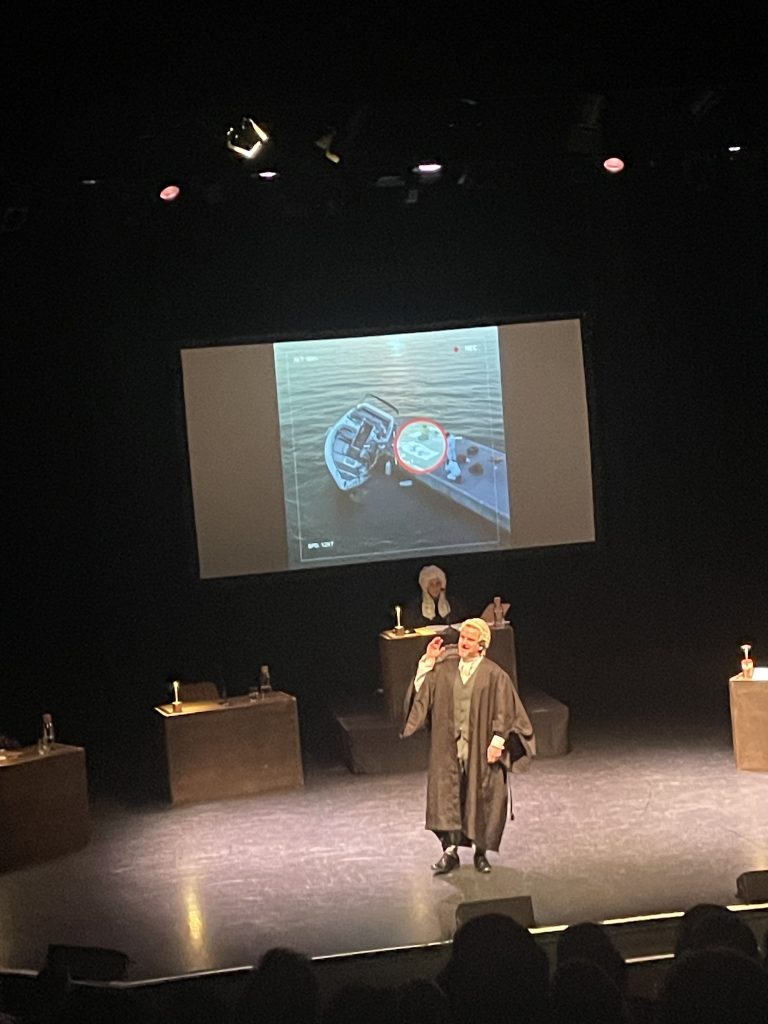
For me, the defence was noticeably weaker than the prosecution. Their opening statement lacked impact, and although the closing argument was more convincing, it didn’t fully account for key pieces of evidence. The 911 call made by another girl on the boat now left in a coma was particularly powerful, as was the revelation of previous violence within the relationship. These details suggested a crime driven by passion rather than a tragic mistake.
One of the most effective elements was the audience vote on which evidence should be revealed. I voted for the text messages between the victim and the defendant, but the majority chose Snapchat messages between the defendant and another injured passenger. These moments highlighted how group decisions and majority opinion can shape the outcome of justice.
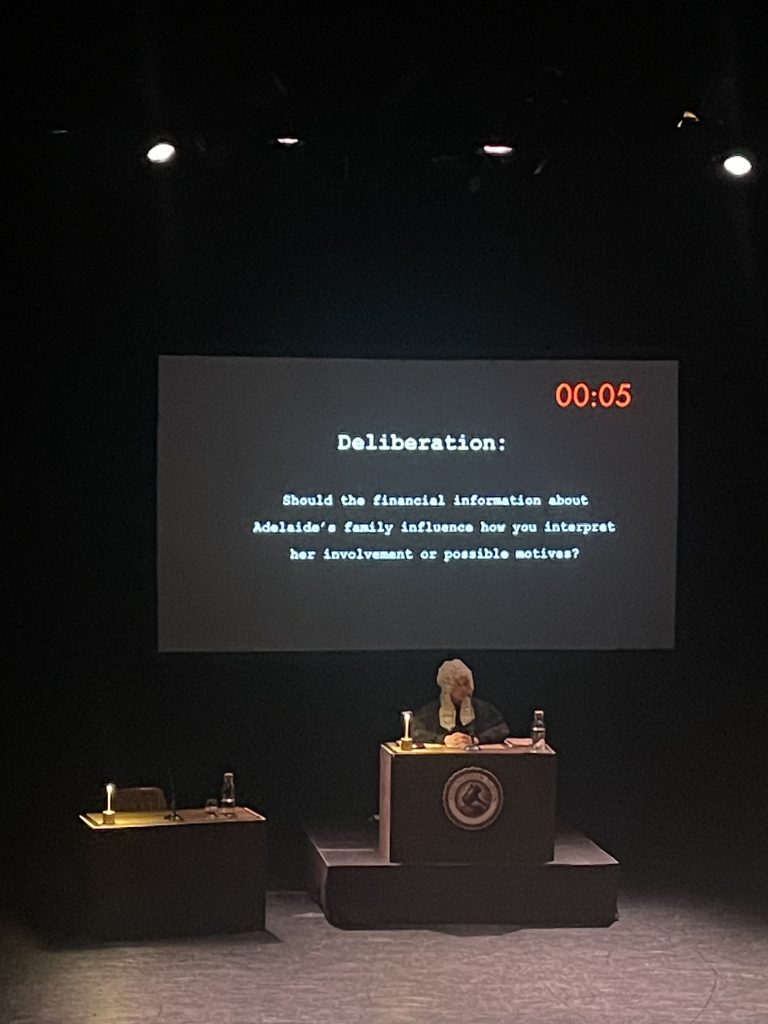
The final verdict was 62% not guilty, leaving me in the minority. While I disagreed with the outcome, that discomfort is exactly what makes The Jury Experience so compelling.
It challenges your morals, exposes the flaws in legal decision-making, and proves that theatre can be as thought-provoking as it is entertaining. For anyone looking for an engaging, unsettling, and genuinely interactive night out, this is well worth seeing.