


Gary Hilborn appears in five episodes of the new season of The Night Agent as Trent Patterson, the Head of the Secret Service at the White House. A seasoned actor with deep roots in theatre and a growing slate of screen and writing projects, Hilborn brings authority, warmth, and lived-in authenticity to every role he takes on.
In this conversation, he talks about stepping into the world of high-stakes political thrillers, the difference between stage and screen, how being an actor shapes his writing, and why his Louisiana roots continue to inform his love of storytelling.
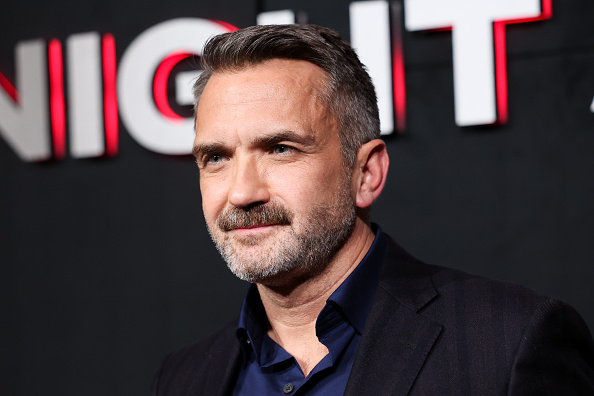
You appear in five episodes as the Head of the Secret Service in the new season of The Night Agent. What first attracted you to this role, and what surprised you once you stepped into it?
It was fun. I came to the show as a fan that’s really what attracted me to it. I’m also a huge fan of the creator, Shawn Ryan, and have admired his work for a long time. I had a feeling I was going to enjoy my time on the show.
The character I play is Trent Patterson. He’s the head of the Secret Service detail at the White House a career Secret Service agent.
I’ve played a lot of those kinds of characters over my career FBI, CIA, detectives so I feel very comfortable in those roles. From the first audition, I felt like I had a real handle on who this guy was and that he was a good fit for me. I was excited to work on something I genuinely liked.
Was the audition process quick?
I can’t remember exactly how long it was between sending in my audition tape and hearing back, but they let me know pretty quickly! I think within a day I knew I was being considered.
They were still finishing the scripts at the time, so the producers were figuring out how much I would be needed and working out the schedule. That part took a few weeks to sort through, but I was excited from the start.
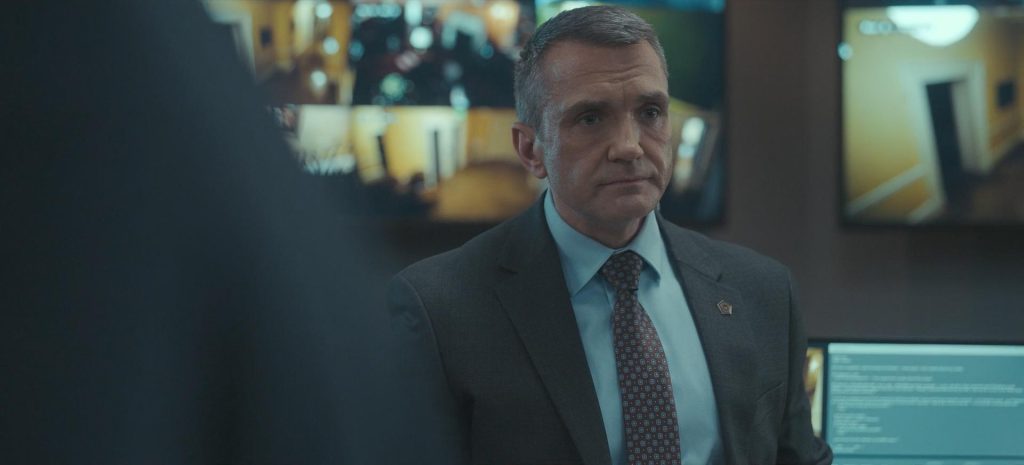
How did you prepare to portray someone with that level of authority and responsibility?
That’s a good question. I’ll say the writing really informed my choices. It’s a very well-researched show.
We also had technical advisors on set who could answer specific questions about our positions not just my job as a Secret Service agent, but the FBI and other branches of law enforcement represented in the story.
I felt in very good hands. If I had a question, I knew I could get an accurate answer. You trust the technical expertise around you, and then it becomes about the relationships between the characters. It was easy to find parallels in my own life understanding responsibility, leadership, loyalty and bring that into Trent’s relationships.
Without spoilers, what can audiences expect from your character’s arc this season?
I’ll try not to give anything away. I’m a Secret Service agent at the White House, so it’s safe to say something happens at the White House that my character is involved in.
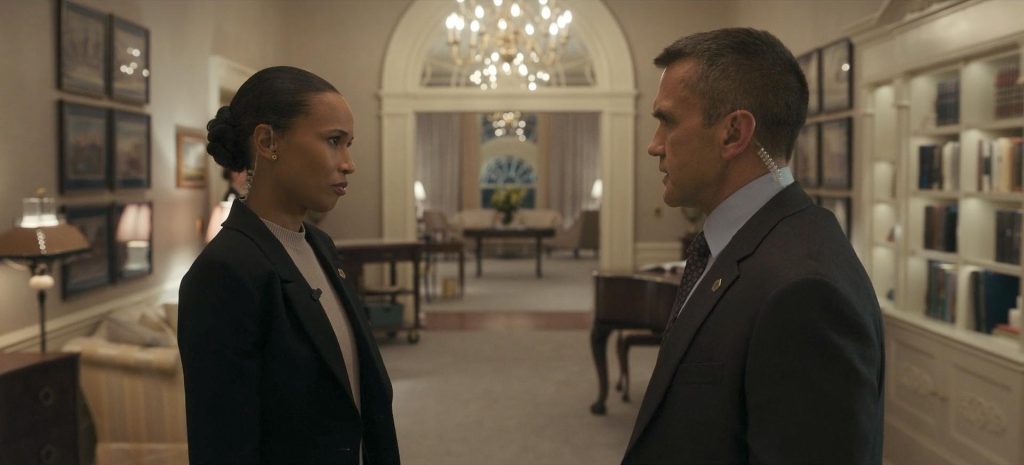
There’s also a character named Chelsea Arrington, played by Fola Evans-Akingbola. I work very closely with Fola. Our characters definitely have their hands full.
Were there any scenes that felt particularly intense or challenging to shoot?
I’ll tell you a funny story from my very first day. I was shooting scenes for two different episodes in the same day. There was a scene, a “walk and talk” where a Steadicam operator walks backward in front of us for one long take. I was working with Fola, and it was my first day on set.
I had shot one easier scene earlier, but then I had this one. I think it’s at the beginning of episode four where I’m walking down this long hallway on the White House set delivering these big, long speeches. It’s all one take. There’s nothing to cut around. It’s just the two of us walking.
I remember thinking, “If I mess up at the very end, we’re going to have to go back and reshoot all of this.” Sure enough, I got to the end and completely lost it. That took a couple of tries.
What was the energy like on set, and how did working on a high-stakes thriller differ from your stage work?
It’s a fantastic atmosphere on that set. I was talking to Shawn Ryan last week at the premiere screening and thanked him for creating such a great work environment. Everybody’s happy to be there. It was truly a wonderful experience.
The big difference from stage work is that with television, you shoot everything in pieces. There’s a large arc you have to keep straight in your head because you’re filming out of order. Something I shot yesterday might not appear until much later in the season.
In theatre, you perform the story beginning to end every night.
The thriller aspect is just fun. On The Night Agent, there’s a lot of double-crossing. You don’t know who you can trust, and the characters don’t either. That’s a great thing to play.
How does being an actor influence your writing process? Do you hear dialogue differently now?
Absolutely. Having been an actor for so long definitely helps my writing. I say scenes out loud as I write them to see how they sound.
If I can say it and it feels natural like something the character would genuinely say then I know I’m on the right track.
After reading so many scripts over the years, I’ve developed a strong sense of what works and what doesn’t. I know what my ear likes to hear, and that absolutely informs my screenwriting.
As far as writing goes, what genre do you gravitate toward?
The screenplay I finished last year, Sev Sharp, is a drama with some mystery elements. The main character is a detective. I have such familiarity with playing those kinds of roles, and they’re the kinds of stories I enjoy watching. It feels very natural to me.
What does it mean to you to work in a time when more diverse stories are being told?
Thank you for asking that. As a gay man who’s been working as an actor for a while, there was a point early in my career when it felt like you couldn’t really be out and still be considered for leading roles or even roles that weren’t explicitly gay.
There just wasn’t much representation, and sometimes it was discouraged explicitly or implicitly to come out. There was this fear that people would say, “He’s gay, so he can’t play this type of role.”
We’ve come a long way. I’m very happy to be out and not feel like I have to hide that part of myself anymore. I’m especially happy that younger actors coming up don’t have to carry that same weight.
Are there any roles or productions that were especially formative for you?
I always come back to theatre because that’s the foundation of my training.
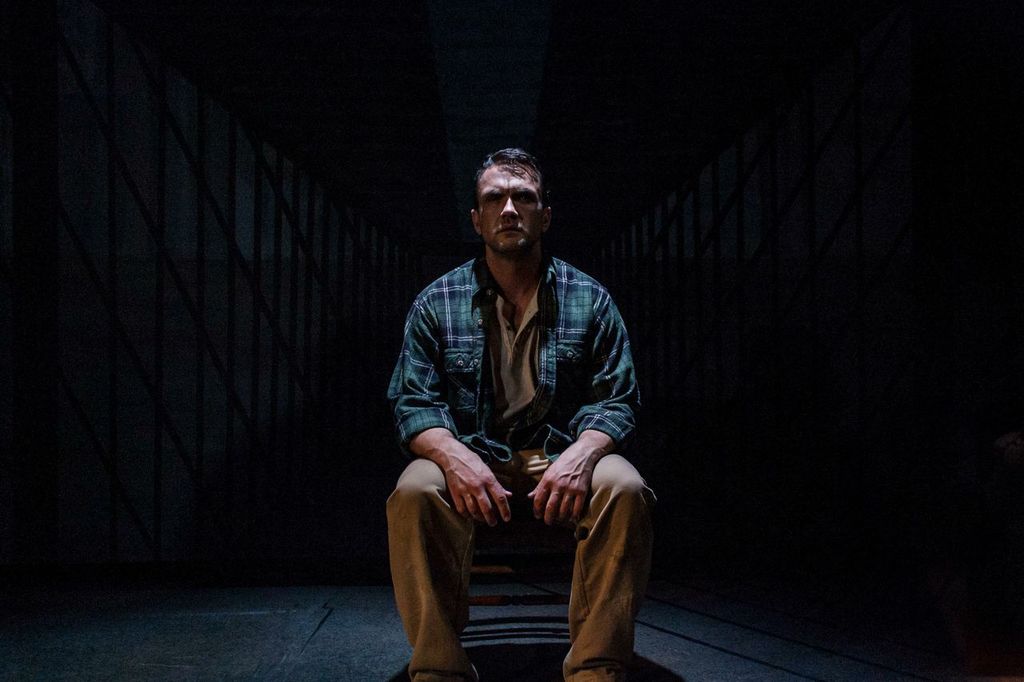
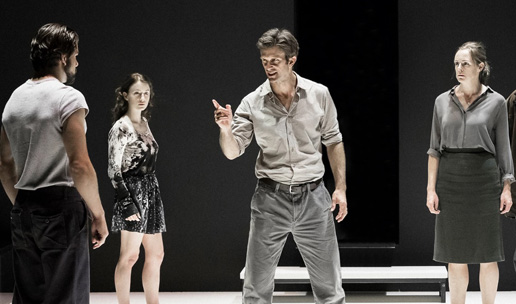
About ten years ago, I had the opportunity to perform in Arthur Miller’s A View from the Bridge. From the first time I read it and from seeing it on Broadway before I ever performed it, I was struck by how complex the central character is.
That role has stayed with me. I was a little on the younger side when I first played it, and I’d love to revisit it at another stage in my life.
I also did several Shakespeare productions early in my career. Just knowing I could do Shakespeare and had done it felt like an accomplishment right out of the gate!
Do you still feel the pull back to the stage?
Definitely. I was just talking with my managers about how much I’d love to return to the stage. It’s a big commitment, so I want it to be something I’m passionate about. But going back to theatre always makes me a better actor. That’s where I connect most deeply to storytelling and character-building.
It’s time for me to get back. I’m looking forward to whenever that opportunity comes.

Is there a question you wish interviewers would ask but they never do?
I don’t often get to give a shout-out to where I grew up.
I’ve lived in New York for 25 years, but I spent the first 25 years of my life in Louisiana. That’s home. Storytelling in the American South is second nature. Everybody has a story. I used to think of myself simply as an actor, but really, my job is storytelling.
When I’m part of a show like The Night Agent, I’m one colour on a larger canvas.
Understanding the bigger story and how I fit into it is everything. Louisiana is a complicated place, but it instilled in me a deep love for storytelling. I always like to acknowledge that.
Is there a director you’d love to work with next?
There are so many directors I admire, both on stage and screen, and I’ve been fortunate to work with people I deeply respect.
One of my goals as an actor is simply to keep working and to keep working with people at the top of their game. I want to collaborate with artists who care about this work as passionately as I do.
If I name one person, I’ll immediately think of someone else I should have said!
What kinds of stories are you hoping to tell next?
There’s great power in a well-told story.
If we can transport an audience whether on television, in a movie theatre, or on stage and let them experience something far removed from their own lives, but still recognize something human and shared in it… that’s powerful.
No matter how different our circumstances appear, we all have hopes, fears, and dreams.
If I can play characters that highlight our shared humanity, that’s what makes me happy.
Do you have any other projects coming up?
My focus right now is producing the screenplay I wrote last year that’s a priority.
I also studied journalism and documentary film production in school. I’m currently budgeting a documentary project that I hope to launch by May. It’s a political project with a strong human-interest angle.
It’s called Blue Souls, Red States, and it will probably take up the next six months.
Whether he’s portraying a Secret Service chief navigating crisis at the White House, revisiting the emotional depths of Arthur Miller, or developing his own screenplays and documentaries, Gary Hilborn approaches his work the same way: as a storyteller.
Grounded by his Southern roots, sharpened by years of stage discipline, and energized by a changing industry that embraces authenticity, Hilborn continues to build a career defined not just by the roles he plays but by the humanity he brings to them.