



Georgie Oakley’s adaptation of Jane Austen’s Sense and Sensibility is a beautifully raw, naturalistic reimagining that strips away the traditional pristine veneer of the period drama. Collaborating with debut screenwriter Diana Reid and cinematographer Arnaud Potier, Oakley creates a film centred on the grit required by women to make their way in the world, the unbreakable bonds of sisterhood and their visceral connection to the natural world.
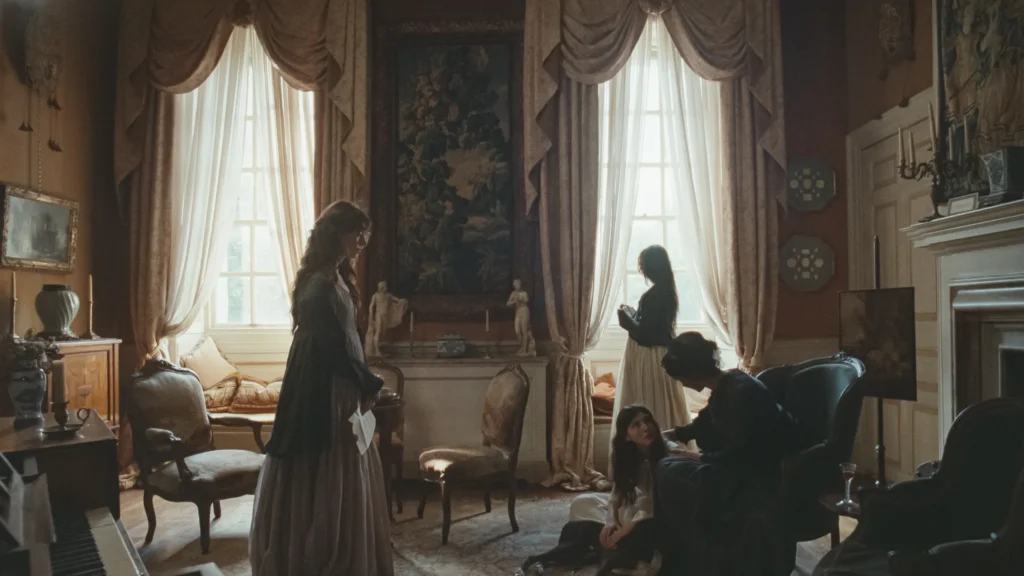
By trading the polished, sunny lawns and gardens of previous adaptations, this version feels less like escapism and more like an exploration of women claiming their agency and identity in a man’s world. It feels wonderfully grounded. The Dashwoods don’t simply appear in a beautiful period setting; they seem to inhabit it. We feel the cold, the mud, the cramped rooms and the insecurity of their circumstances.
The photography is stunning. The camera lingers on candlelit shadows, stained-glass windows and heavy objects inside the stuffy rooms of cavernous estates and the cramped rooms of Barton Cottage, where the Dashwood women find themselves without a male benefactor. These still-life compositions become a metaphor for their lives, trapping the characters within frames that mirror their financial and social isolation.

Outside, the cinematography avoids picture-perfect landscapes. Instead, the screen is alive with windswept hills, muddy lanes and dense forests. The landscape seems to reflect the turbulent emotions of the protagonists, making the natural world feel almost like another character in the film.
The male suitors, Edward Ferrars (George MacKay) and John Willoughby (Frank Dillane), drive the plot and yet remain secondary characters. The defining love story here is entirely between the sisters.
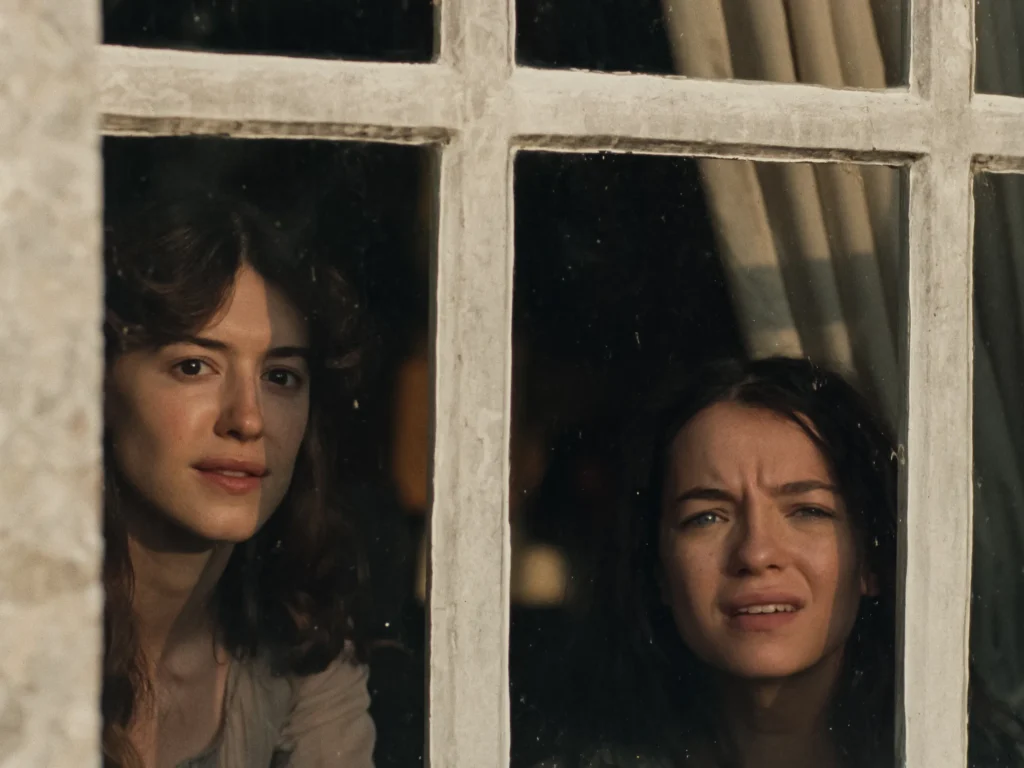
Daisy Edgar-Jones as Elinor Dashwood and Esmé Creed-Miles as Marianne share a brilliant, effortless chemistry. They capture the particular contradictions of sisterhood: the arguments, frustrations and differences in personality alongside an absolute, almost instinctive devotion to one another.

Elinor conceals her emotions, while Marianne, with her vulnerability and impulsiveness, can barely contain hers. They clash bitterly over their philosophies of life, but when heartbreak arrives, it is not simply romantic love that sustains them. Their relationship becomes the emotional sanctuary of the film.
The other female performances are equally impressive. Caitríona Balfe brings a quiet dignity to Mrs Dashwood as she bears the burden of sudden poverty and tries to protect her daughters. Fiona Shaw almost steals every scene as Mrs Jennings, bringing both comedy and warmth to a character who could easily have become merely a source of gossip.
For me, this is where Oakley’s version surpasses Emma Thompson’s beloved 1995 adaptation. Thompson’s Sense and Sensibility, directed by Ang Lee, is warmer, more polished and more traditionally romantic, and it remains a wonderful film in its own right. But Oakley’s interpretation feels more intimate, raw and psychologically immediate. It is less concerned with presenting an idealised vision of the period and more interested in what it actually meant for women to live within those restrictions.
That makes this Sense and Sensibility feel surprisingly modern without losing the romance at its heart.
It is a moody, deeply moving take on a timeless story that celebrates female solidarity, emotional endurance and the complicated love between sisters. And for anyone who loves romance, there is still plenty here to swoon over so take your tissues and watch as these women navigate heartbreak, poverty, expectation and convention while finding their own strength.
And then comes that final scene.
We still have the beautiful emotional release of Elinor and Edward’s confession, giving the romantic story the resolution we have been waiting for. But it is what comes afterwards that stayed with me most. Returning home, Elinor and Marianne embrace in their back garden, and the film chooses to end not on a romantic couple, but on the two sisters.

It is a simple, deeply moving image that brings everything back to the relationship at the heart of the film. After all the heartbreak, uncertainty and upheaval, they have found their way home and, most importantly, they have found their way back to each other.
That final embrace feels like the perfect expression of Oakley’s vision. The romances matter, but the enduring love story has always been between these sisters. And by ending with them together, at home and in each other’s arms, the film leaves us with something more lasting than romantic fulfilment: the extraordinary bond of sisterhood.
For me, that is what makes Oakley’s Sense and Sensibility so special and why I found it even more affecting than the Emma Thompson version.
The greatest love story here isn’t simply between Elinor and Edward or Marianne and Willoughby.
It is between two sisters who, when the world gives them almost nothing, give each other everything.