

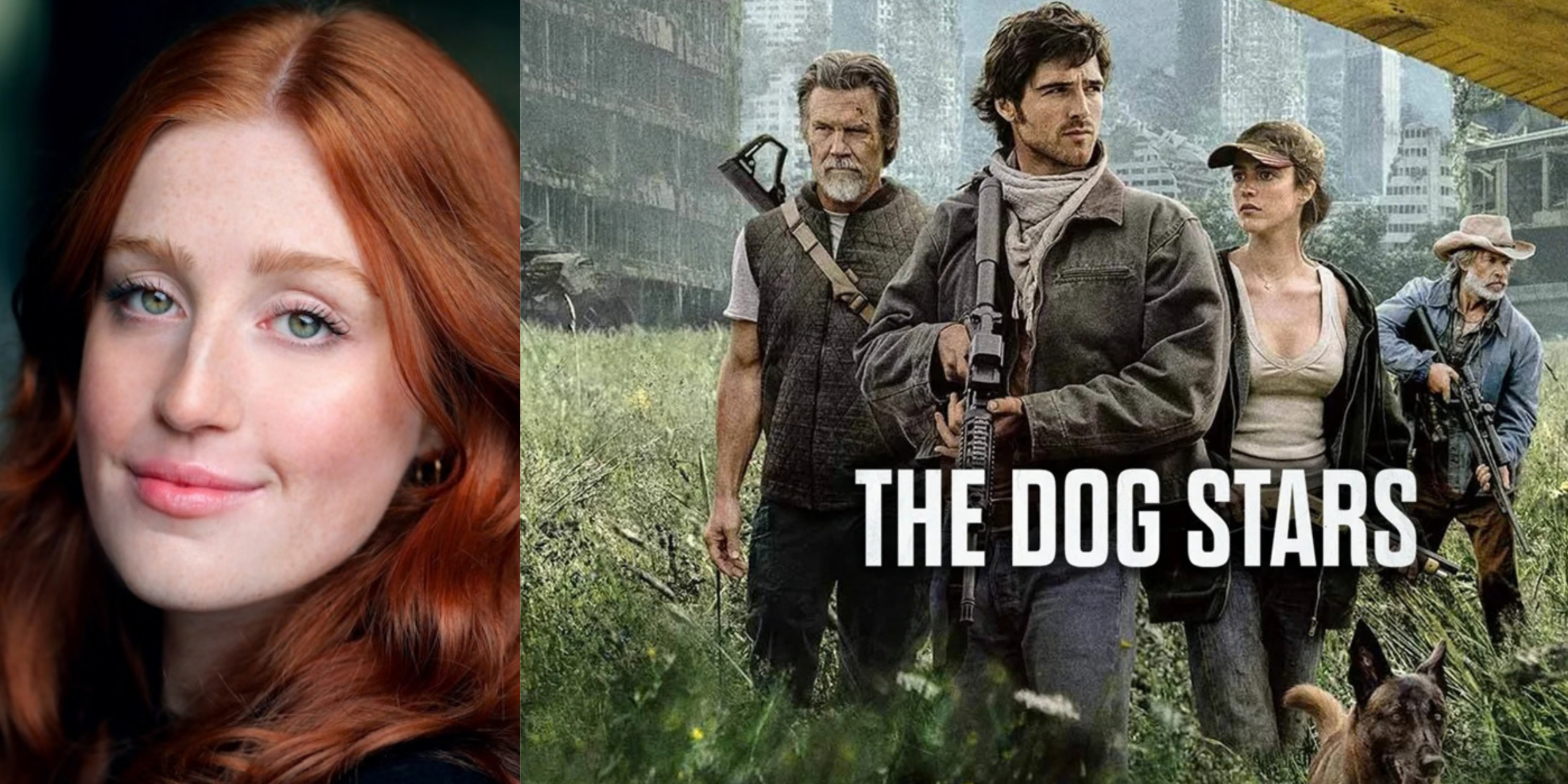
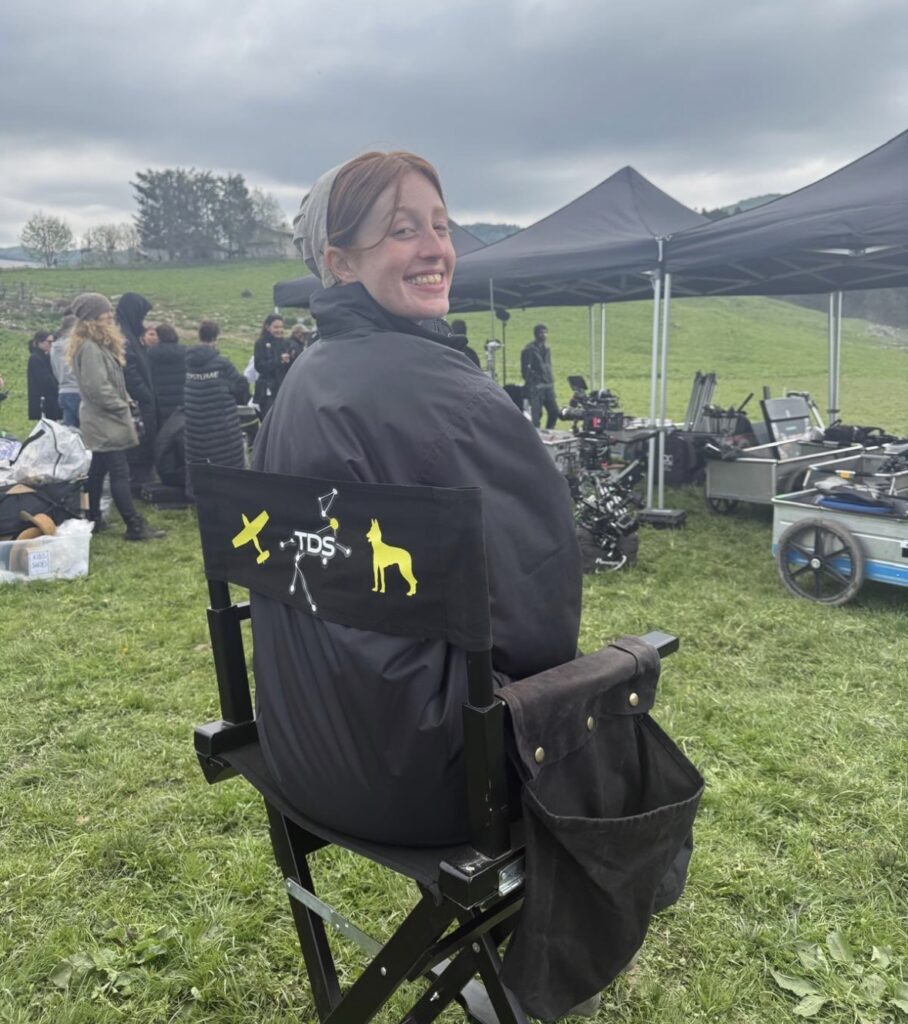
For Daisy Kakkar, stepping onto the set of Ridley Scott’s Dog Stars was both exciting and daunting. Making her feature-film debut alongside an acclaimed cast including Jacob Elordi and Benedict Wong, Kakkar found herself working under one of cinema’s most celebrated directors and learning to adapt to his famously fast-paced approach to filmmaking.
Kakkar plays Mary, a Mennonite woman living with her husband, Aaron (played by Wong), in a post-apocalyptic world where a deadly disease has wiped out much of humanity. Away from the set of Dog Stars, Kakkar has also appeared in House of the Dragon and has a background in theatre, having discovered her love of acting while studying at university.
We spoke to Kakkar about her experience filming Dog Stars in Italy, working with Ridley Scott, the cast and crew who made her first film such a memorable experience, and the people and films that inspired her to become an actor.
Congratulations on your role in Ridley Scott’s new movie, Dog Stars. What was it like stepping into a dystopian, big-budget project like this?
It was terrifying, if I’m honest, because it was my first film.
I think there’s a lot of pressure when you get a project like this, especially when you’re working with a director as big as Ridley Scott. I don’t know what it was, but with other projects I’ve done, it didn’t feel like there was quite as much pressure.
Stepping onto a set with Ridley Scott and working with such well-established actors was quite nerve-racking. I have to say, when I arrived in Italy, I was terrified.
How long were you in Italy for?
I was only out there for about two and a half to three weeks. Even though I wasn’t out there for that long, it was a pretty intense experience.
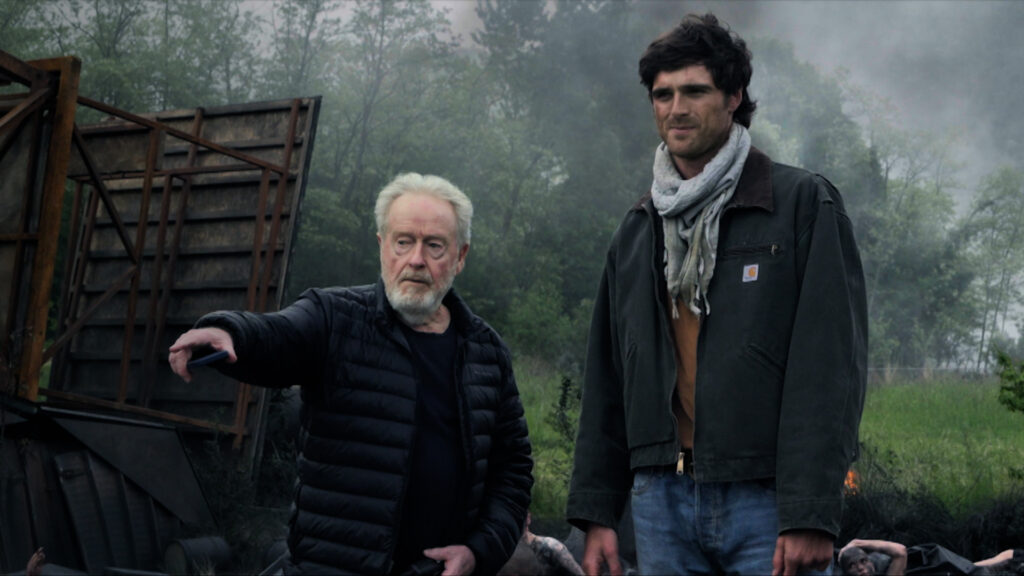
What was it like working with Ridley Scott, and how would you describe his directing style on set?
The way Ridley films means we would always end up so far ahead of schedule. Some days, we’d get two days’ worth of filming done in one day.
The way he works is quite different from what I’ve experienced with other directors. Most of the time, when you’re on set, you’ll have two cameras on you. You’ll do the scene from one angle, then step off while they reposition the cameras, and then you’ll do the same scene again from a different angle.
With Ridley, he can have anywhere between eight and 11 cameras on you at once. You might do five or six takes of a scene, and then you just move on. He’s incredibly efficient in the way he films.
I think that’s what’s quite nice about his approach, although it can also take a little getting used to. I don’t think “stressful” is quite the right word, but I’ve definitely worked with directors who are more actor-focused who really get in there with you and guide you through the scene, talking about the intention and what they’re looking for.
With Ridley, it feels more like he works with his amazing casting team to find the right people, and then he trusts them. It’s almost like, “Cool, I’ve hired you. I think you’re great. I trust you to do it. Get on set and do it.”
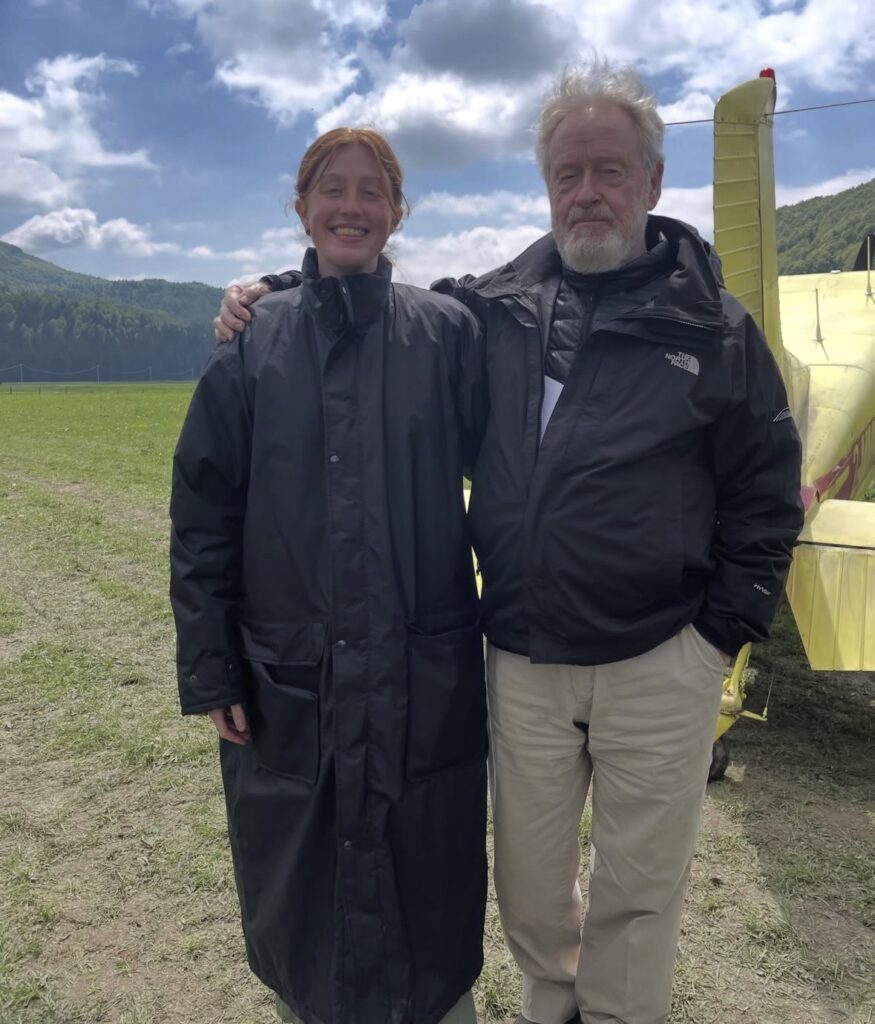
What was your first day on set with Ridley like, and did you have to adjust to his fast-paced way of working?
I remember my first scene was with Benedict Wong and Jacob Elordi. Luckily, I didn’t have anything to say; I was just standing next to Benny.
After about five takes, we got the all clear from Ridley’s 1st AD that he was happy with the scene and it was time to move on to the next. I remember Benny turning to me and saying, “Right, okay, so no warm-up takes. Just straight into it.” He was like, “Okay, cool. So this is how it is.”
There would be days when you’d look at the schedule and see that you had two or three scenes that you were aiming to get through, and then you’d end up doing six because you’d just rattle through them.
It was also partly because we were filming up in the forest, so we couldn’t always rely on the weather. We had to make the most of the time we had.
How was working with Jacob Elordi and Benedict Wong?
I learned a lot from Benedict because most of my scenes were with him, and I spent a lot of time with him. He was just so kind and so gracious. I felt like he really looked after me on that set. He’d come and eat lunch with me every day.
Jacob was so kind as well. He was just a really lovely, down-to-earth guy. You could see he took the craft really seriously whilst finding the balance to chat and relax in between takes.
Everyone on that set was super kind, considering how famous they all were. The atmosphere was really cool and chill.
Can you tell me a little bit about your character in the movie?
I played this Mennonite woman called Mary, who is Aaron’s partner.
We’re living on a Mennonite farm after the apocalypse, in this little enclave where we believe we’re infected with the disease that has wiped out humanity.
Higg, Jacob’s character, delivers goodies like sodas and sweets he’s collected from his trips into abandoned towns.
There was actually a lot more to Mary’s storyline that didn’t make it into the final film, including scenes with our children. She was very much a maternal figure, supporting Aaron and looking after all these Mennonite children in the apocalypse.
It was a shame that so much was cut, but that happens with films, especially when you start with a script that’s over 200 pages. I was actually in the film much more than I expected, so it was a lovely surprise.
After the premiere, Benny gave me a massive hug and said, “Hey, you’re in the film more than me!” It was very sweet.
Do you have a memorable behind-the-scenes moment that happened while filming?
One of my favourite memories was meeting the dogs who played Jasper for the first time. We had all these Italian children playing the Mennonite kids, and I don’t speak Italian, so there was already a bit of a language barrier.
Then this huge German Shepherd came bounding over to meet them. She was incredibly sweet and well-trained, but the children weren’t expecting her to be quite so enthusiastic!
They all started running away and screaming while the dog chased after them, and Benny and I couldn’t stop laughing.
We had to reassure the kids that she was completely harmless and just wanted to cuddle. At one point, the dog even knocked one of her trainers over, which made the children even more terrified.
One of the girls who played my daughter ended up hiding behind me for every take!
We kept having to say, “We need Alara to come forward. We need her in the shot!” She was basically like, “Absolutely not.” I eventually said, “I can pick her up if we need to!”
It was just one of those funny, chaotic moments that made filming memorable.
Did you always want to be a performer? Was it always there, or was it a slow burn?
It was always there. My family work in the industry. My dad’s an actor and my stepdad is a producer, so it’s something I’d always grown up around.
When I was younger, I was quite a hyper and energetic child. I was shoved into all sorts of after-school clubs, including drama classes, and I also just remember really liking the attention when I was younger. I loved it.
I remember at 18, I was saying to my parents, “I’m going to go to drama school. I’m going to do that. I’m going to be an actor.”
Thankfully, my mum and my stepdad were like, “No, we don’t think so.” It wasn’t because they didn’t believe in me. I think it was because, from their experience of working in the industry and knowing people who went to drama school, they were like, “Why don’t you go to university and get a degree something to fall back on and if you still really love acting, then do it?”
My stepdad is a producer, but he’s got a degree in chemical engineering from Cambridge, and I went to Leeds to study international history and politics and now look at me. During my first week at university, my mum called my asking how everything was going, and I just remember telling her I was enjoying my course but that I had already joined the drama society and had been cast in a play.
I was so thankful that they steered me away from drama school at that age, because I think when I was 18, I just really wanted to be famous.
It was during COVID, and I was trying to organise and produce various Zoom plays, and I remember almost having this epiphany moment, which sounds a bit wanky, but I just remember thinking, “If I don’t pursue this as my career, I’m never going to get the chance to do this again. This is the one thing that brings me so much joy.”
When I got to third year, I was still acting alongside writing my dissertation. In my final year, I got cast as the lead in Suddenly Last Summer by Tennessee Williams.
After I graduated, I thought, “Let’s get the ball rolling. Let’s try and get an agent.”
You have a background in theatre. Film or stage — do you have a preference?
I think most actors will say theatre is more rewarding, but TV will pay you. So, if theatre could pay as well as film and TV did, I would just do theatre.
It’s a shame there’s just not the same funding for theatres anymore.
You appeared in House of the Dragon. How did that experience compare with Dog Stars?
Well, hilariously, I actually shot House of the Dragon and then, a week later, I was in Italy doing Dog Stars.
It was really insane, filming those projects back-to-back. House of the Dragon had already been doing it for two seasons, and obviously, by the third season, it’s such a well-oiled machine.
They know what they’re doing. All the actors are amazing. I was acting with Emma D’Arcy and Sonoya Mizuno, and they’re such generous, kind actors.
I remember Emma it was just such a small thing, and they so didn’t need to do it, but it was such a kind thing for them to do. The shot of the scene was on me, and my eyeline had to be at Emma, so I was just looking at where Emma was in the scene.
I remember our director, Lonnie, kept saying to me, “Hey, Daisy, I need your eyeline to be more over this way.” Emma was like, “I’m not in the scene. I’ll just stand where you need the eyeline to be.” It’s just a little thing like that. It’s so generous of her, and that’s how I felt working with Benedict as well.
I think the difference was that House of the Dragon was very slick and very well-oiled. They knew what they were doing.
I think working on location, which we were for Dog Stars, compared to working on a set already brings so many differences as well.
It’s the most incredible and intricate set. One of the actors at the read-through said to me, “If you’ve got any time in between takes, just look around the set. Open books, open drawers, read everything.” Everything was so detailed, and I would just do that.
Whereas on Dog Stars, we were on a farm in Northern Italy, so it felt somewhat more unpredictable. We might have to start a take again because the cows walked into shot.
Who are your heroes, or those who have inspired you?
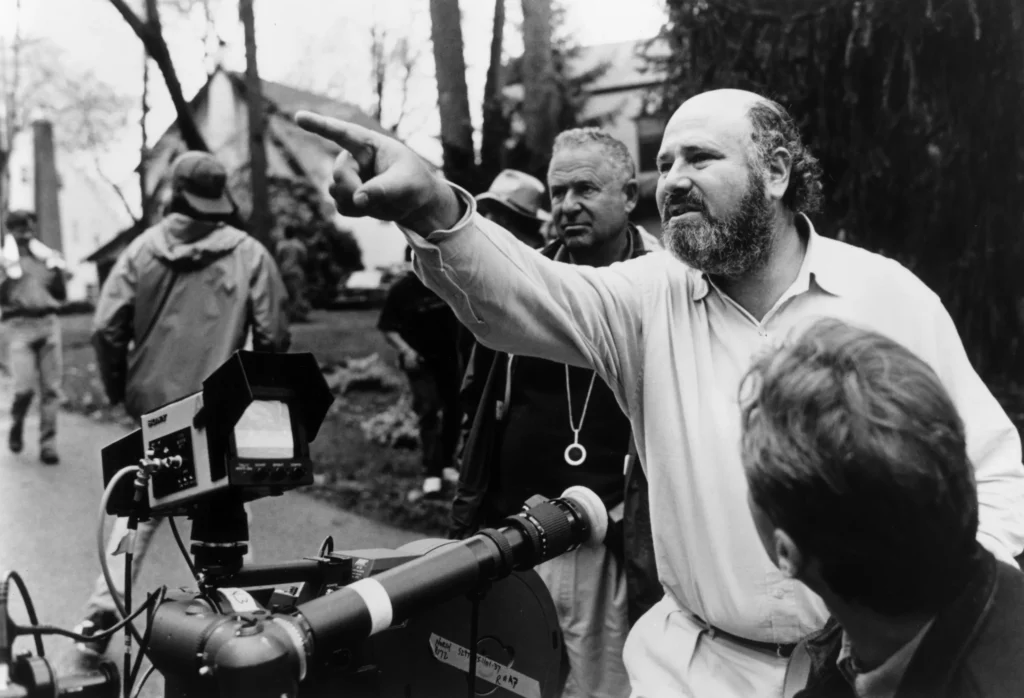
The main reason I am an actor is Rob Reiner. The most incredible director and actor out there, who sadly passed away at the end of last year.
My all time favourite film is The Princess Bride, and I remember watching that when I was maybe five years old. I just remember thinking, “This is amazing. This is so fun. It’s so cool.”
Then, growing up and understanding what the concept of being an actor was, I remember watching that magic and thinking, “Oh my God, I can do that.”
Then I started looking at all of Rob Reiner’s films everything he created. When Harry Met Sally, Stand by Me, Misery, This Is Spinal Tap his filmography was incredible. There isn’t a bad film in there.
If you could be in a scene with any actor, past or present, who would it be?
That is such a big question.
I grew up watching a lot of the old MGM musicals, so I’d love to if I could act in a scene with this person, I’d also like to have their talent as well I would love to have a scene with Gene Kelly.
I cannot dance to save my life, but if I could suddenly end up in Singin’ in the Rain or An American in Paris, and I could have his dancing ability, if I could do a scene with him, it would be brilliant.
I think there’s something so beautiful and so romantic about those old Hollywood musicals, and we just don’t make them anymore.
What’s the best note a director has ever given you?
I really liked the way that Ridley gave notes. They were uncomplicated. He would just give you a word for each scene.
I thought that was brilliant because I think sometimes, already as an actor, when you’re on set, you’re getting in your head about things. You can overcomplicate things yourself, and then sometimes, if you’ve got a director who’s giving you notes, not necessarily bad ones, but giving you too many notes, there are too many voices going on.
What I loved was the simplicity of Ridley’s notes.
I remember one of our scenes, he just came up to me and said, “Your word for the scene is reverence.”
And I loved the simplicity of it. Because I hadn’t actually thought of playing the scene in that way, but to have that one word input from Ridley shifted my view on the scene and the performance I gave.
From making her feature-film debut on a Ridley Scott production to finding inspiration in the work of Rob Reiner, Daisy Kakkar’s journey into acting has already taken her to some remarkable places. Her experience on Dog Stars seems to have been as much about learning as it was about performing from adapting to Scott’s uniquely efficient directing style to working alongside established actors who helped make her first film a memorable experience.
With House of the Dragon and Dog Stars adding to her growing screen credits, and her love of theatre still firmly intact, Kakkar is clearly only at the beginning of her career. If her enthusiasm, honesty and willingness to learn are anything to go by, there’s plenty more to come.