

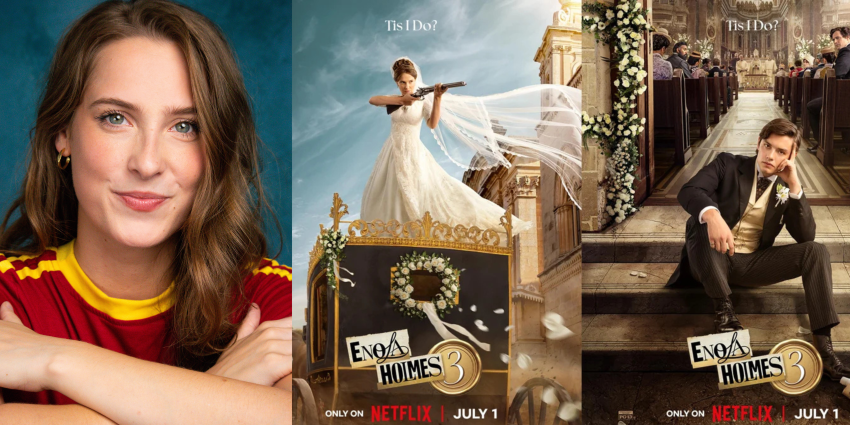
While audiences remember the performances they see on screen, there’s an entire team working behind the scenes to help bring those moments to life. Among them are stand-ins and doubles, whose work ensures everything from lighting and camera positions to continuity is ready before the cameras roll.
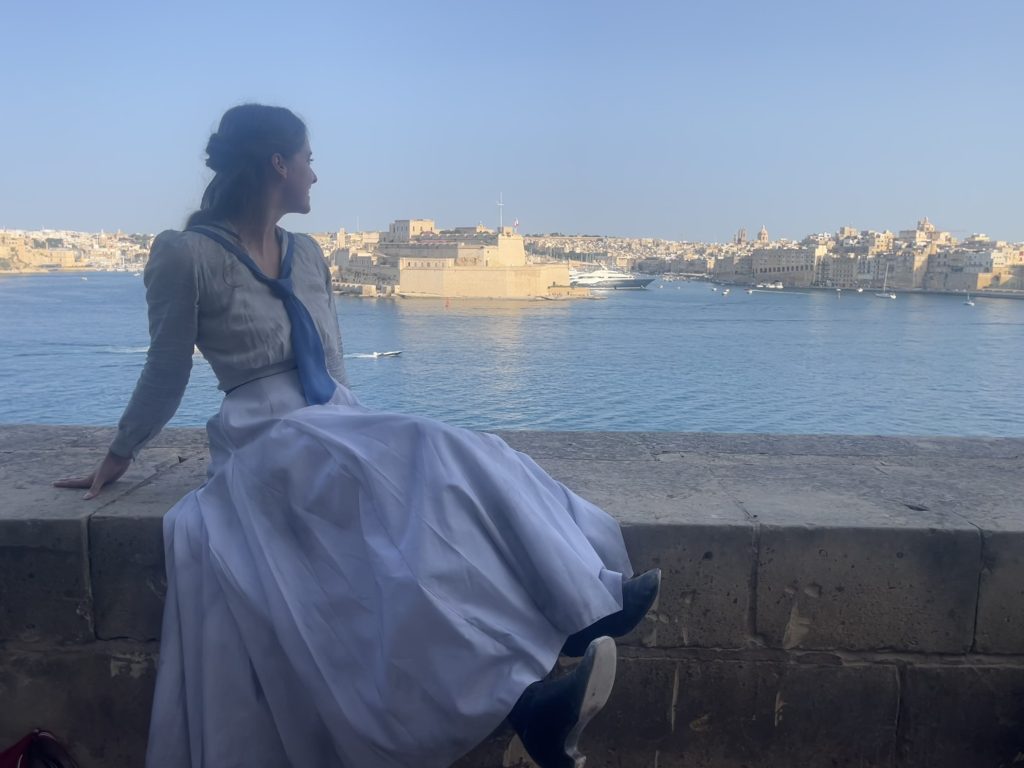
Actor Caitlin Florence Rose experienced that first-hand while working as Millie Bobby Brown’s stand-in and double on Enola Holmes 3. Spending three months between Shepperton Studios and location filming in Malta, she became an integral part of the production, collaborating with the crew on technical shots, pick-ups and scenes that audiences will never realise required another performer.
Beyond Enola Holmes 3, Caitlin has appeared in Sex Education and continues to build an exciting acting career on stage and screen. We spoke to her about the realities of being a stand-in and double, memorable moments from filming, working on a major Netflix production, and the roles she’d love to take on in the future.
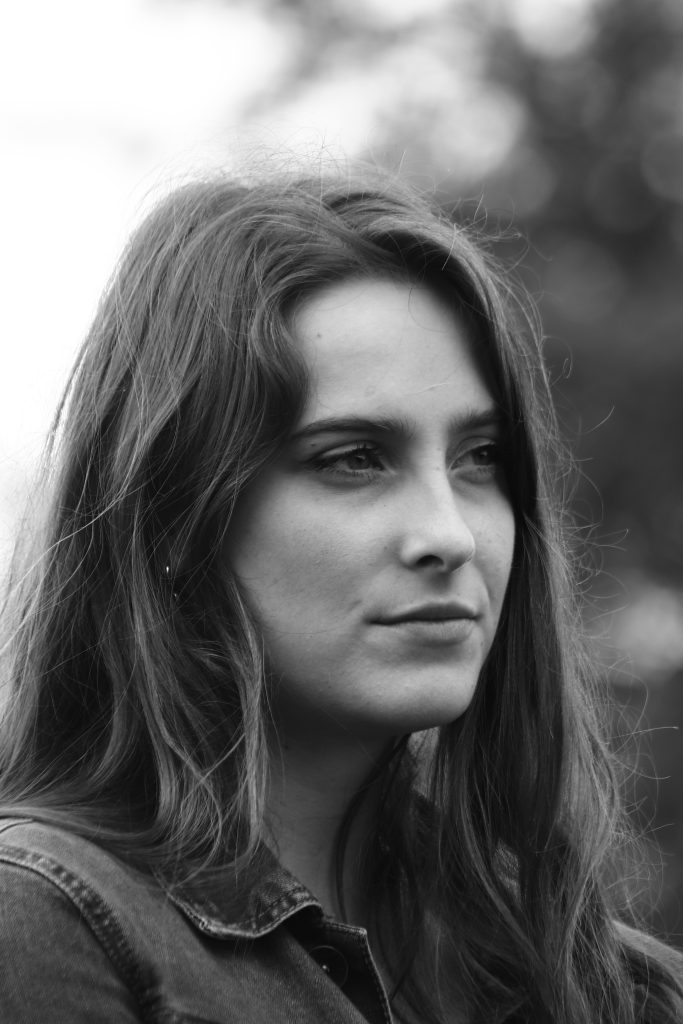
You worked as Millie Bobby Brown’s stand-in and double on Enola Holmes 3. What does that role involve in a way audiences might not realise?
As a stand-in, you’re there to make sure everything is technically ready before the actor steps in. That includes lighting, camera focus and all the technical setup, so when Millie comes onto set as Enola, she can focus entirely on the performance.
As a double, it’s slightly different. You’re in costume, standing in for the actor during technical shots or scenes where another performer needs someone to act opposite. The aim is always to make everything look seamless on screen.
How much collaboration is there between a stand-in, the actor, and the crew?
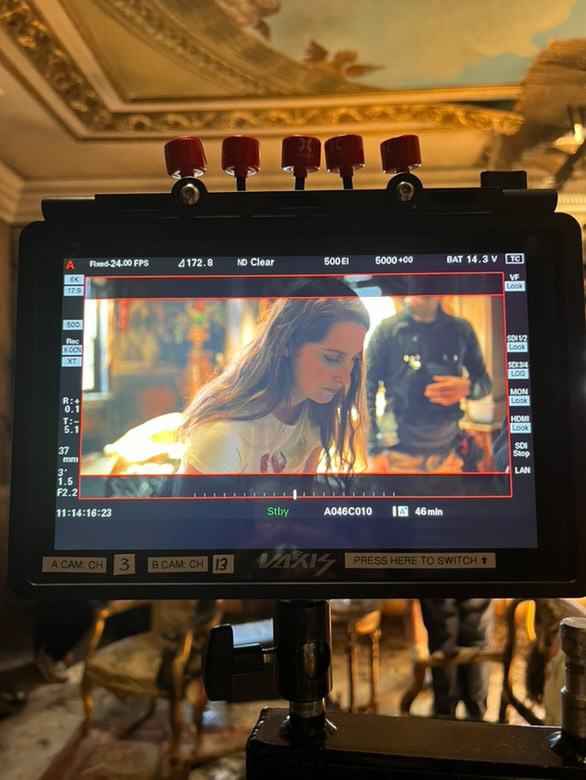
Most of the collaboration is with the crew. If you can, it’s useful to watch the actor, but that’s not always possible. Sometimes you’re dealing with small spaces, signal issues, or closed sets where you can’t see the monitors.
In those cases, you rely on the director or script supervisor to talk you through what’s just happened. That happened quite a lot on Enola Holmes 3.
Angelica ‘Jelly’ Pressello, the script supervisor, would often show me playback/ B-roll from the monitors. Alongside director Phil Barantini and cinematographer Matt Lewis, they’d each give different notes. My job was finding the balance between continuity, performance, and the technical side of the shot.
Was there anyone in particular whose guidance helped you the most?
They all helped in different ways, so it wouldn’t be fair to single one person out. Jelly focused on continuity, Phil was looking for the strongest performance, and Matt was thinking about everything from a technical and editing perspective. It was quite funny at times because they all wanted slightly different things, so I had to find a middle ground that worked for everyone.
Were there any scenes on Enola Holmes 3 that were particularly challenging from a technical standpoint?
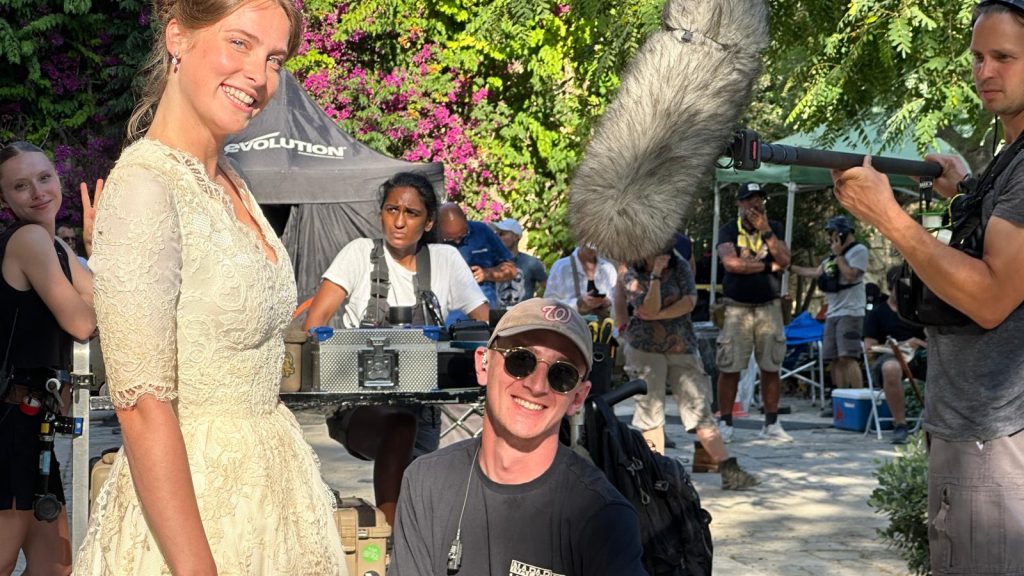
There was one day where I had to film a full carnival sequence on my own, in full Enola costume, moving through crowds and tracking a suspicious character. To capture all of the wide and behind-the-back tracking shots of Enola walking through the carnival.
It was a really large, busy set, so there were people everywhere, and I had to navigate through it all while staying in character. What made it especially challenging was that I didn’t have a reference performance to work from. I had to think ahead about how Enola would move through that space, what she would be focused on, and how she would react from moment to moment, almost like building the performance from scratch in real time.
Phil Barantini was really collaborative throughout, which made a huge difference. He was very clear about what he wanted but also gave me the freedom to explore, so although it was technically demanding, it ended up being one of my favourite days on set.
Was there a scene you particularly enjoyed working on?
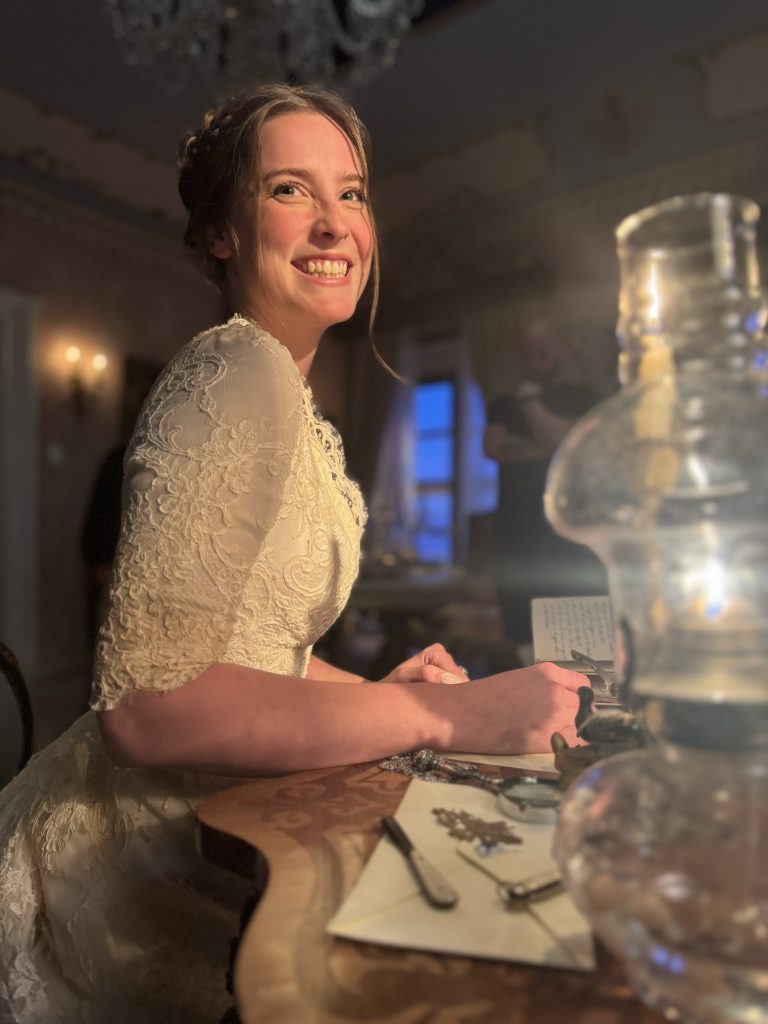
There’s a scene where she tries on three different wedding dresses, and it was absolutely hilarious to watch Millie perform it. Her improvisation is incredible. It was one of those lighter filming days where there wasn’t heavy dialogue or complicated blocking we were just in this really fun setup. We had music playing on set, and it just became a really relaxed, playful atmosphere. It didn’t feel like work in the usual sense.
How long were you involved in the production?
My journey started a little earlier during costume fittings in March, before filming properly began. Then we were at Shepperton Studios for about two months in April and May, and later moved to Malta in June for location work. Those early fittings were really interesting because I was seeing the costumes before everything had fully come together on screen. Getting to see it built from scratch and see Consolata Boyle’s designs and work before it was finalise by Millie Bobby Brown, it was beyond a privilege. Later on, seeing everything on her and watching it all connect in the final production was really rewarding it brought the whole process full circle, and she looked amazing in her costumes which made it a full circle moment.
What surprised you most about working on a large Netflix production compared to other sets?
It’s really the scale of it. When you’ve worked on indie films, you’re used to very small teams where people are often doing multiple jobs at once. On something like Enola Holmes, there are entire departments working in the background that you never even interact with directly all making sure everything runs smoothly. It’s a very different way of working, because everything is so structured and finely tuned.
What do you think audiences enjoy most about the Enola Holmes films?
I think it’s seeing a more grown-up version of Enola. It explores identity, relationships and independence in a way that feels really relevant to people in their 20s and 30s. It’s very relatable, especially for women navigating big life decisions and trying to figure out who they are, whilst navigating autonomy over their own identity.
Looking back at your first television role in Sex Education, what stands out most in your memory?
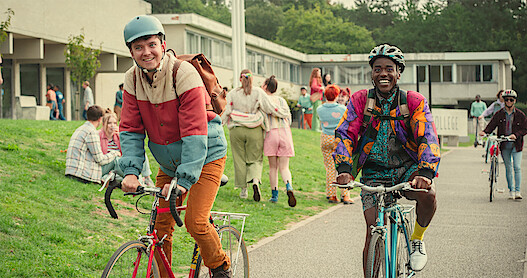
The cast were all incredibly kind and welcoming. It felt like we were genuinely in a school environment, even though it was a set it was very immersive. I came into Sex Education in season four, and part of what made it interesting was that they had to move to a new school location because the original building was being knocked down. So even for the main cast, there was this sense of stepping into something new again. That gave the whole set a slightly different energy. For me, I was just really excited to be there I was soaking everything in, watching how it all worked and learning from being around such an experienced cast.
What is the best piece of advice you’ve received from someone in the industry?
That it’s important to have a fulfilling life outside of acting as well. Work matters, but your personal life is what actually sustains you.
If you could join any current TV show, what would it be?
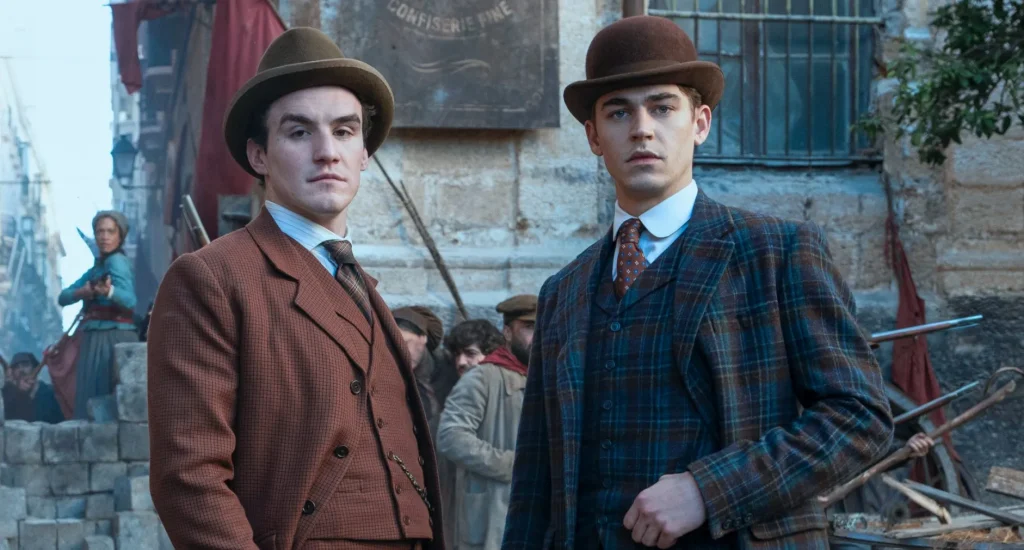
Ironically, I would love to step into Young Sherlock. I enjoy the quick pace and grittiness of their take on it whilst keeping its wit and charm. I’ve always loved murder mysteries, especially the slightly cosy, classic ones I used to watch with my nan.
Is there a book you’d love to see adapted?
Things We Leave Unfinished by Rebecca Yarros. I think it would translate beautifully to screen. I also have another idea I’d love to develop one day it’s a story about revenge, but you don’t realise that’s what it is until much later. I really like stories about complex women and layered narratives like that.
Is there a role you’d love to play in the future?
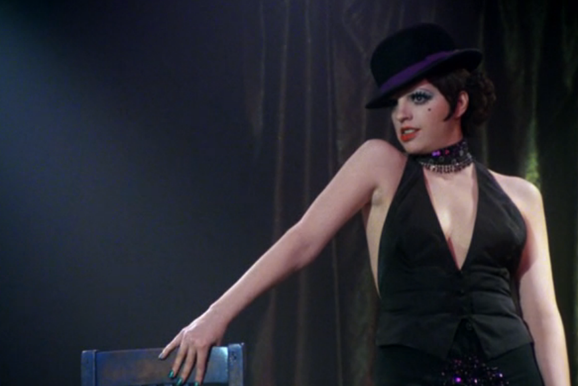
That’s such a lovely question. I would happily, at a different time in my life, do Cabaret. Sally in Cabaret would be amazing at some point in my life. I’ve done a lot of physical theatre, but not much stage work recently, so that would really challenge me. On screen, I’d love to keep playing complex, slightly messy women characters that feel real and unpredictable. Also, when I am more mature, I love the idea of playing Kate Middleton if they were to re-prise the crown years down the line, I actually auditioned for young Kate before for the crowns last season.
Is there a question that interviewers would ask but they have never done?
My goodness. we actually spoke a bit about books in this interview, which I really enjoyed. I’m quite a visual reader, so I often imagine everything unfolding like a film while I’m reading. So probably more about that.
If a film were made about your life, who would play you?
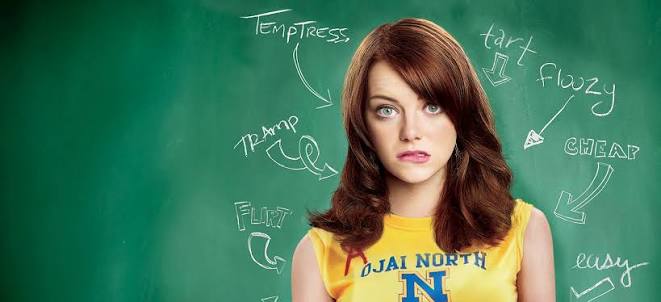
When I was younger, I would’ve said Emma Stone especially around her Easy A era.”
What’s next for you?
I’ve got two film projects coming up. One is a two-hander feature where I play a character called Penny. It follows her over the course of a single day as she reconnects with an ex and reflects on her life in her 20s. I’m also going to be in Wasted by Kae Tempest at the Etcetera Theatre in September. It’s a short run, but I’m really excited to get back on stage and do something live again. We’re going to be doing that just for a few nights which is a very similar topic. Clearly there’s a theme!!
Speaking with Caitlin Florence Rose offers a fascinating reminder that filmmaking is a true collaborative effort. While audiences naturally focus on the actors they see on screen, stand-ins and doubles play an essential role in helping productions run smoothly and allowing performances to shine.
With upcoming film projects on the horizon and a return to the stage in Wasted, Caitlin is clearly building an exciting career of her own. Whether working behind the camera or taking centre stage, she’s an actor whose passion for storytelling comes across in every answer.