


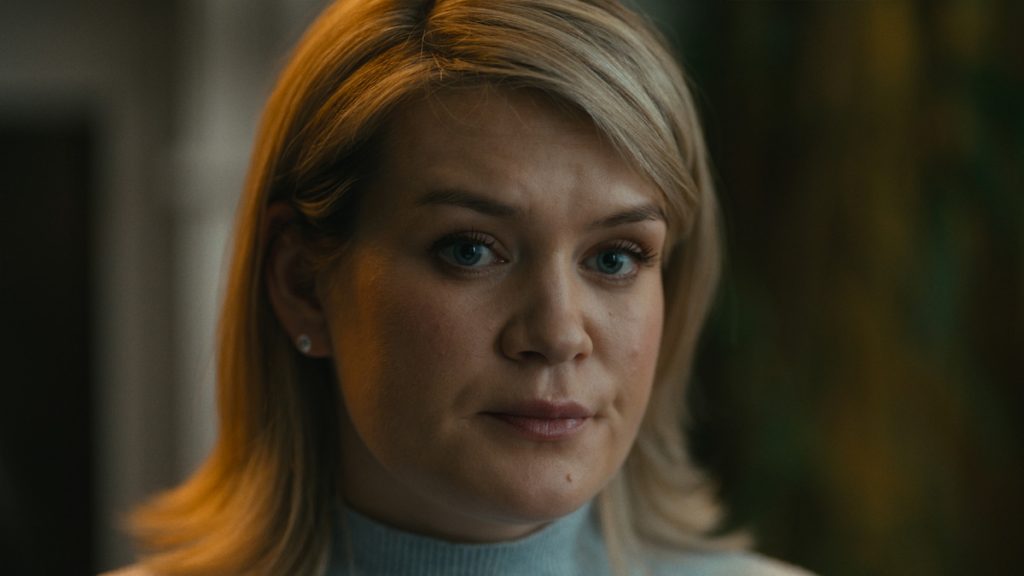
Caroline Muirhead is an extraordinary woman though not in the way most stories would lead you to expect.
This three-part limited series on Netflix (each episode running around an hour) begins like a modern love story before quickly descending into something far darker and more unsettling.
At 29, Caroline meets Scottish farmer Sandy McKellar on Tinder, just after leaving a messy seven-year relationship. Sandy feels like a safe haven open, affectionate, and intensely devoted. But the cracks show early. His brother, after a few drinks, casually warns her that Sandy can become “dark” and unstable.
Still, the relationship moves fast. Sandy proposes, and Caroline accepts. Wanting honesty from the start, she insists there be no secrets between them a decision that changes everything.
Sandy confesses that three years earlier he was involved in a hit-and-run that killed a cyclist, Tony Parsons. With the help of his brother Robert, he buried the body.

What follows is where the series becomes both gripping and deeply uncomfortable. Caroline goes to the police but rather than being protected, she is drawn into the investigation. They ask her to find the body. She does, marking the spot with something as strangely ordinary as a Red Bull can.
From there, she continues the relationship as if nothing has changed, secretly gathering evidence, recording conversations, and feeding information back to the police all while putting herself in increasing danger. She’s promised anonymity and protection.
Neither truly materialises.
As the pressure builds, the toll on Caroline becomes impossible to ignore. Living in constant fear, she spirals into alcohol and drug use, her mental state deteriorating as she tries to maintain the façade. And yet, the police continue to rely on her, offering little in the way of meaningful support even when her family raises concerns about her safety.

One of the most striking examples of just how far she has unravelled comes on the first day of the trial. Overwhelmed by the situation, Caroline doesn’t turn up to court. Instead, she becomes fixated on finding the victim’s missing bicycle, convinced it could somehow help the investigation. Despite knowing she could be arrested for failing to appear, she sets off in search of it even going so far as to steal a tractor to locate a remote waterfall where she believes it might be.
The whole episode feels surreal. Not funny in a “laugh out loud” sense, but in that deeply uncomfortable way where you’re watching someone make decisions that no longer follow logic, only desperation. It’s a moment that encapsulates her psychological state fractured, overwhelmed, and completely unsupported.
What I found most baffling and frustrating is the systemic failure around her.

At every stage, Caroline is clearly vulnerable, yet the protection you would expect simply isn’t there. Even requests for additional security for her family appear to go nowhere. She is left exposed, carrying the weight of an operation that feels far beyond what any individual should be asked to handle.
Even more troubling is the response from those in authority.
David Green, former head of homicide and major crime in Scotland (2019–2023), downplays the relationship, noting it wasn’t particularly long and highlighting that Caroline was a “highly intelligent, qualified doctor.” Defence counsel Brian McConnachie KC similarly suggests her actions make it difficult to feel sympathy.
Both perspectives feel strikingly lacking in empathy.

They ignore the reality that intelligence does not shield someone from emotional vulnerability, fear, or manipulation. Under sustained psychological pressure, people don’t always act in ways that seem rational from the outside and this series shows that in stark detail.
Should I Marry a Murderer? is more than just a true crime story. It’s an unsettling look at what happens when institutions fail the very people they depend on.
It asks difficult questions about responsibility, about protection, and about how we judge those caught in situations most of us will never truly understand.
Caroline Muirhead’s story isn’t tidy, and it isn’t comfortable.
But it’s impossible to ignore.