

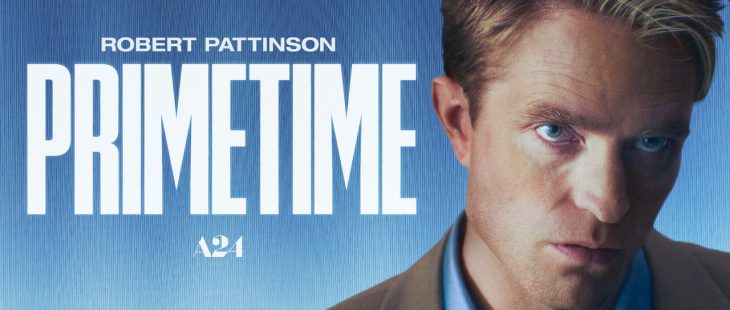

Directed by Lance Oppenheim, who is best known for his documentary filmmaking, Prime Time marks his first dramatic feature debut. I don’t think he does too bad a job of making the transition, either. Robert Pattinson also takes on producing duties, as well as starring in the film as Chris Hansen.
One of the things I particularly loved was the gritty 1970s-style photography, which gives the production a distinctive look and atmosphere. For me, though, the best scenes are those featuring Robert Pattinson and Skyler Gisondo. In fact, Gisondo, playing Dan Plum, and Merritt Wever, as Andie Bender, really steal the show. Gisondo, in particular, is a brilliant actor.
Yes, the film deals with some very dark subject matter, and it is certainly a slow watch, but I do think you have to stick with it. There is plenty going on beneath the surface, and the film becomes increasingly uncomfortable as it unfolds.

The subject matter is the controversial American television programme To Catch a Predator, which originally featured on NBC’s Dateline between 2004 and 2008.
For anyone unfamiliar with the programme, its researchers, working alongside the group Perverted-Justice, posed as children in online chatrooms, engaging with men they suspected of seeking sexual contact with minors. Meetings would then be arranged at so-called ‘sting houses’, where hidden cameras would capture the encounters. Actors playing underage teenagers would greet the men at the front door, encouraging them to enter, before presenter Chris Hansen would suddenly appear to confront them. These confrontations made for some particularly compelling television, with the police often waiting nearby to make arrests. The programme also raised some serious questions about the legal and ethical implications of these operations, including the possibility of entrapment.
In Prime Time, Robert Pattinson plays Chris Hansen, who is becoming increasingly ambitious about taking the programme to the next level. Alongside his producer, Andie Bender (Merritt Wever), he is determined to attract bigger audiences and make the show an even greater television success. However, things are not quite as straightforward as they first appear. Hansen has problems in his private life, including an affair that threatens to become public knowledge, while Andie is also considering her own career prospects and the possibility of moving to a rival television programme.

Meanwhile, we are introduced to Dan Plum (Skyler Gisondo), a 23-year-old aspiring actor who is recruited to play an underage decoy. Initially uncomfortable with what he is being asked to do, Dan gradually becomes more accustomed to the role and increasingly keen to impress Hansen.
As the pressure to maintain the programme’s ratings grows, Hansen becomes fixated on finding what he calls ‘the whale’ – a particularly high-profile target who could potentially make television history. This eventually leads the team to Texas, where they pursue Bill Conradt, an assistant district attorney. However, the decision to take the operation further than usual, with devastating consequences, brings the film’s central questions about ambition, responsibility and the ethics of television into much sharper focus.
For me, the secret engine of the entire film is Skyler Gisondo as Dan Plum, a relatively unknown 23-year-old actor who has very little idea of the sort of role he is getting himself into when he walks onto Hansen’s set. He is gradually taught how to convincingly portray a minor on camera, and as filming progresses, his initial nervousness begins to disappear, along with his sense of right and wrong.

When Hansen attempts to reassure him by saying, “You remind me of my son,” the sincerity of Plum’s reaction is particularly upsetting. Through several close-up shots, we witness what appears to be his natural compassion gradually giving way as he becomes increasingly desperate to impress both Bender and Hansen.
His desire to earn money, pursue acting opportunities and fulfil his ambition of joining the Screen Actors Guild seems to come at the expense of his own moral judgement. The film therefore raises an uncomfortable question: how much of yourself are you willing to sacrifice in pursuit of professional success? It is one of several troubling themes that make the film so difficult to forget.
I also think there is an interesting contrast between Hansen’s public persona and his private life. He is presenting himself as someone who is exposing and confronting people for their behaviour, yet he is struggling with his own personal problems and questionable decisions. There is also a sense that the programme’s original intentions are becoming increasingly entangled with the pursuit of television ratings, recognition and personal ambition.
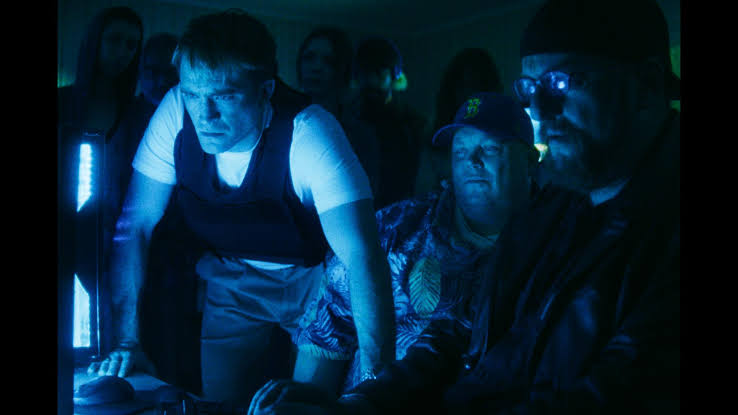
My main criticism is that I don’t think some of the subplots, particularly Hansen’s private life, really add very much to the overall story. I would have liked these elements to have been explored a little further, rather than simply sitting alongside the main storyline. I would also have liked to see more attention given to the legal and ethical risks surrounding the sting operations. Given that the film is inspired by real events and a television programme that raised some very serious questions, I think exploring this side of things in greater depth might have added another interesting dimension.
Ultimately, I think Prime Time is a fascinating, if occasionally uneven, production. It raises some uncomfortable questions about the relationship between investigative journalism and entertainment, and how easily the pursuit of justice can become entangled with personal ambition and the desire for higher ratings.
Nevertheless, the performances are very strong, particularly Skyler Gisondo, who I thought was excellent as Dan Plum. It is a slow burn, and certainly not the easiest of watches given its subject matter, but I do think it is worth sticking with. There is plenty to think about long after the credits have rolled.